Closing the Colour Gap from Lab to Production
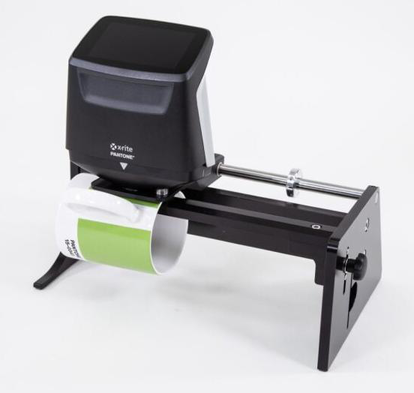
X-Rite Pantone's Spectura platform is designed to bring laboratory-grade colour measurement into the production environment. But what are the technical challenges involved in achieving consistent colour measurement across different instruments, materials and production conditions?
We spoke with Matt Adby, Product Development Director at X-Rite Pantone, about the development of Spectura, the challenges of measuring colour on packaging substrates, the impact of temperature and fluorescent colours, and why the increasing use of recycled materials makes robust colour measurement even more important.
From laboratory to production: what makes consistent measurement difficult?
Plaspak Asia: Spectura has been designed to provide greater agreement between laboratory and production-floor measurements. From a technical perspective, what are some of the challenges involved in achieving that consistency across different instruments and measurement environments?
Matt Adby: One of the key challenges is ensuring compatibility and agreement between different instrument types and existing equipment. Spectura is designed to work alongside X-Rite's benchtop and legacy sphere instruments, so that measurements remain comparable across the colour-control process.
This is particularly important with packaging because different substrates and surfaces can behave very differently.
For example, when measuring metallic surfaces such as beverage cans, a sphere instrument is important because it collects the light reflected back from the surface. A conventional 45° instrument can interpret the reflected appearance very differently and may not accurately represent the colour of the ink on a metallic surface.
What changes when colour measurement moves onto the production floor?

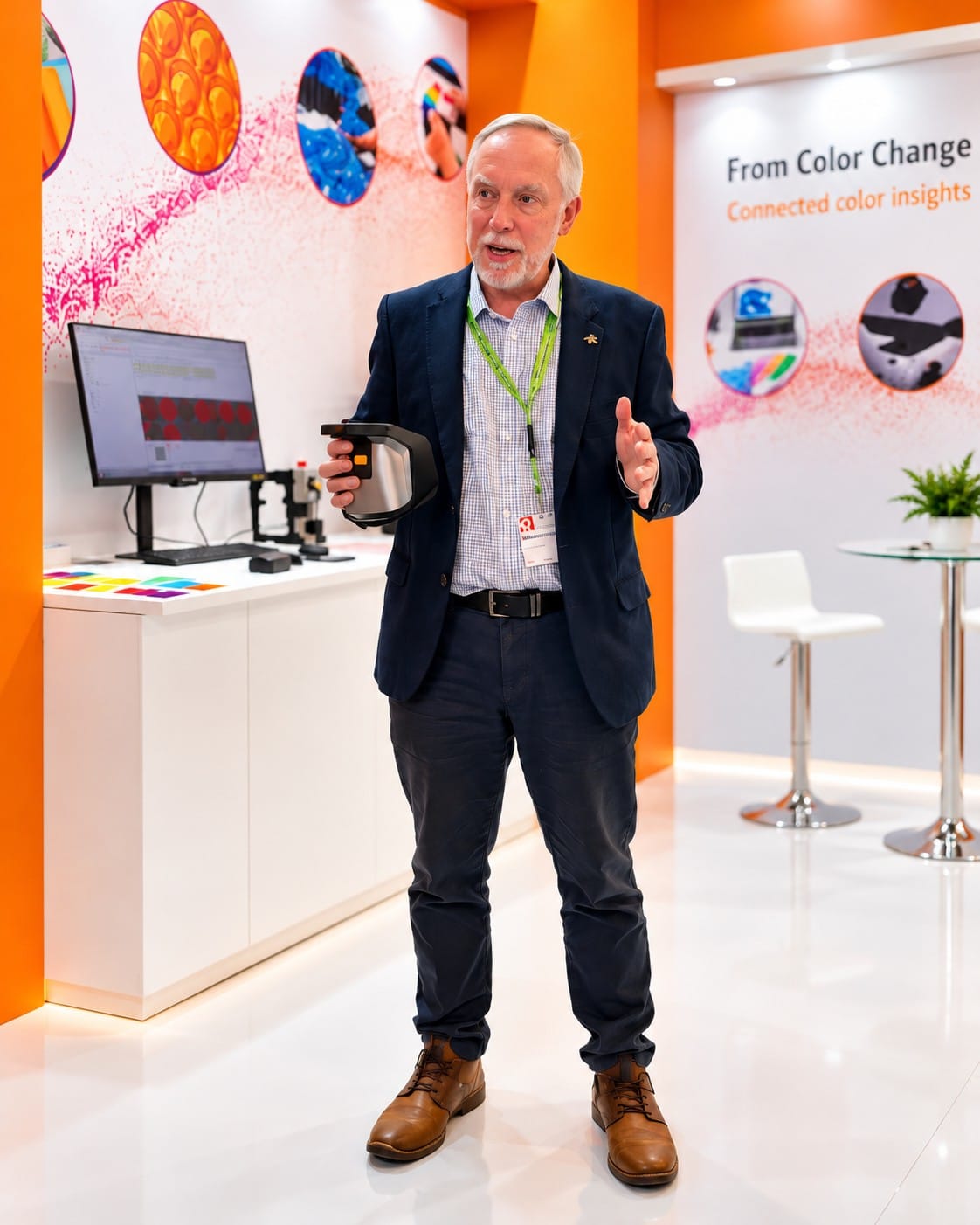
Spectura; Matt Adby, Product Development Director, X-Rite Pantone Photo Credit: X-Rite Pantone
Plaspak Asia: How does connectivity change the way colour measurement can be carried out in production?
Matt Adby: Traditionally, if someone wanted to take an instrument into production, they would have to pre-populate it with the colour standards they needed. They would download those standards to the instrument, disconnect it, take it into the factory, make the measurements and then bring the instrument back to upload the data.
One problem is that the operator may not have selected the correct standards in the first place.
With a direct connection to the cloud, users can access the standards in their data cloud and select what they need. Measurements can also be synchronised directly from the production floor, allowing managers to have a live view of current quality and how measurements are performing.
How does Spectura handle different packaging substrates?
Plaspak Asia: Packaging manufacturers work with a wide range of substrates and materials. Does Spectura work across these different substrates?
Matt Adby: The sphere instrument, with its specular included and excluded measurement conditions, works with a wide range of substrates.
There are some limitations when dealing with effects such as metallic flakes, where a multi-angle instrument may be more appropriate if you need to understand how the colour changes depending on viewing angle.
But fundamentally, the instrument can be used on plastics, including plastics containing metallic flakes, as well as pearl-type materials. We have also carried out testing with masterbatch suppliers.
Fluorescent colours: a measurement challenge
Plaspak Asia: You also highlighted fluorescent colours as an area where conventional colour measurement has been challenging. What is happening technically when these colours are measured?
Matt Adby: Fluorescent colours behave differently because they absorb light at one wavelength and then re-emit it at another.
With conventional measurement, there can be inconsistencies between instruments because the illumination is not fully controlled across the relevant wavelength range. These differences can also develop as the illumination source changes as an instrument ages.
With Spectura's calibrated, tunable LED illumination, there is much greater control of the illumination, which improves consistency when measuring fluorescent colours.
This can be important for applications such as fluorescent plastics used in packaging, where the visual impact of the colour is part of the product's appearance.
Temperature: the overlooked variable in colour measurement
Plaspak Asia: Another point that stood out was temperature. How significant can temperature be when measuring colour?
Matt Adby: I've worked with X-Rite for 28 years and have always known that temperature affects the sample. Traditionally, we would tell people that the sample must be conditioned and measured at the same temperature.
What I didn't fully appreciate until we started this work was how significant the effect could be.
Matt Adby, Product Development Director, X-Rite Pantone
That can become very significant in a production environment. A factory could start the day at a much lower temperature and then warm up substantially as production continues. A large temperature difference can therefore result in a colour shift that is greater than the specified tolerance.
Spectura addresses this through a thermal-profile methodology. The sample is measured as its temperature changes, allowing a profile to be created and a correction applied. In one example, a 10°C temperature difference that produced a 1.1 ΔE difference could be reduced to around 0.1 ΔE after applying the correction.
Plaspak Asia: We often think of temperature variation as a bigger issue in markets with colder climates. But could it also be particularly relevant to packaging production in Southeast Asia?
Matt Adby: Absolutely. The issue is that colour standards may be established at around 20°C, while manufacturing in places such as Malaysia or Singapore can take place at around 35°C.
That creates a potential variance if the production sample is not measured under the same conditions as the standard. The result can be that measurements say a sample is acceptable, but when the components are physically brought together, the colours don't match.
Technology alone isn't enough
Plaspak Asia: This brings us back to the gap between the laboratory and production floor. How much of the colour-control challenge is actually a technology issue, and how much comes down to process?
Matt Adby: The process is very important. Sample presentation and consistency are critical, and there needs to be an agreed process covering things such as sample temperature and conditioning.
But that also relies on the instruments being used. We need agreement between different instrument types and need to make sure instruments remain in good condition.
That's why we have NetProfiler, which uses ceramic coloured tiles to allow users to check whether their instrument is working correctly and to make adjustments when environmental changes affect the instrument. It also gives brand owners and suppliers greater confidence that the measurements they receive are accurate.
Training is another important part of the process. Users need to understand not only how to operate the instrument but also what the measurement means, including which colour difference metric and tolerance should be applied.
The recycled-material challenge
Plaspak Asia: Finally, recycled materials are becoming increasingly important in packaging, particularly recycled PET. Does increasing recycled content create additional challenges for colour measurement and control?
Matt Adby: Yes. The use of recycled materials, particularly recycled PET, is a significant challenge because recycled materials are typically more variable in colour than virgin materials.
Matt Adby, Product Development Director, X-Rite Pantone
The important thing is to establish the expected colour and tolerances of the recycled material and then use colour data to guide the process.
Matt Adby: Recycled material will typically create a “dirtier” shade or tone, so you first establish that as your starting point. Once you have that, you give yourself an allowance to adjust around it.
If you put the programme in place early, understand its limitations and use colour data to guide you, you can optimise the maximum amount of recycled material that can go into the package while still achieving the required colour specification.
Masterbatch suppliers can also play a role, helping packaging manufacturers formulate and adjust the level of recycled material in the mix, with colour-measurement software supporting that process.
About Technology Insider
Technology Insider is Plaspak Asia INSIGHTS' editorial series exploring the technologies, innovations and technical developments shaping plastics packaging across Asia. Through conversations with industry experts, the series examines how new solutions address practical production challenges and the industry's evolving needs.
Subscribe to Plaspak Asia INSIGHTS for exclusive industry analysis, technical features and future editions of Technology Insider.